
How to Price Freelance Design Work: Moving Beyond Gut Feelings
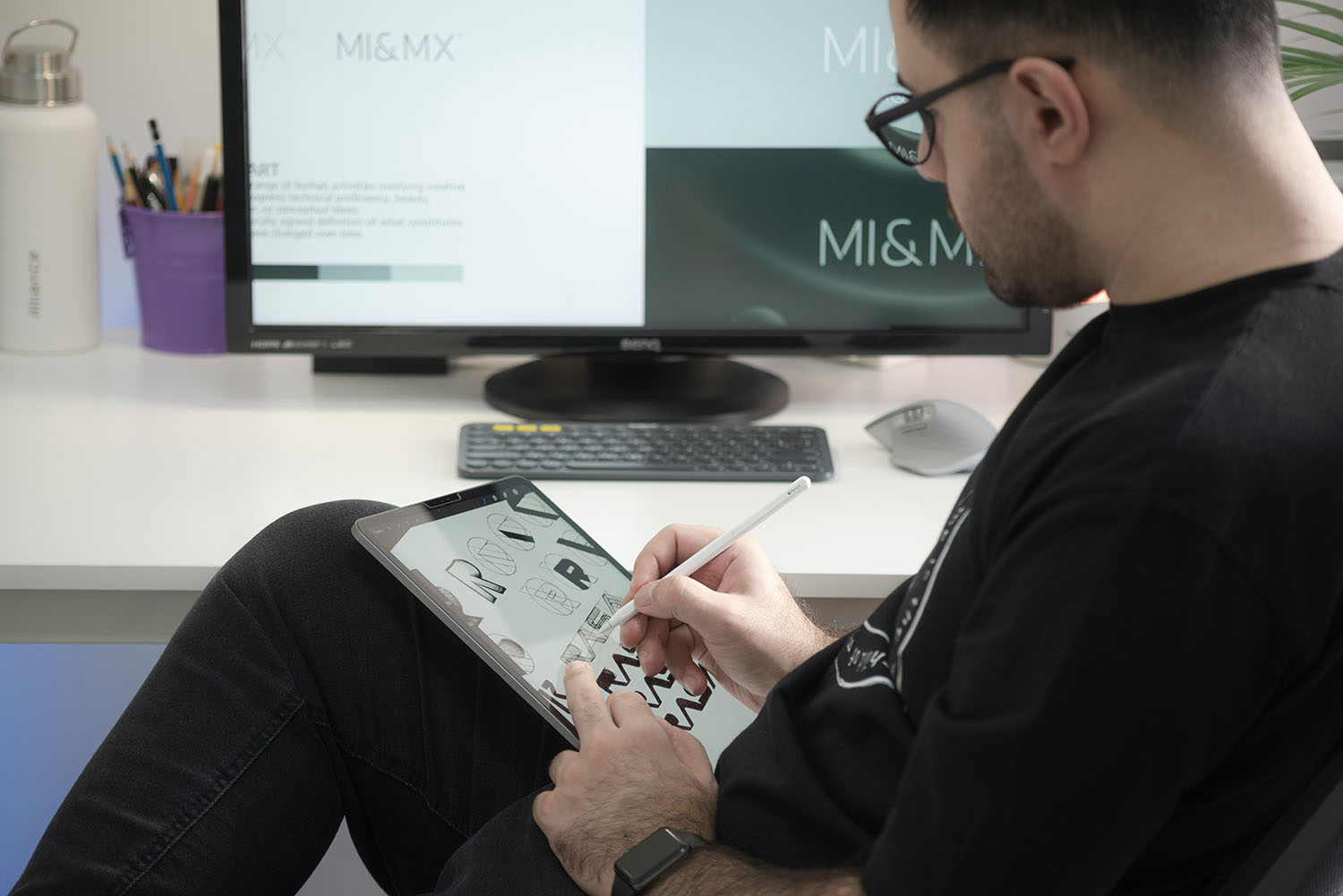
You just finished a major branding project. The client is thrilled. You delivered everything on time and the final designs look fantastic in your portfolio. For weeks, you poured your energy into the work, fueled by caffeine and creative passion. The final invoice is paid, and the money hits your account. It feels like a win.
Then you start doing the math. You pay for your Adobe subscription. You cover the cost of those premium fonts and stock photos. You set aside a large portion for taxes. When the dust settles, you look at what is left. The number is surprisingly small. For all those late nights and countless revisions, your effective hourly wage was barely above minimum. You were busy, but you weren't truly profitable.
This is a familiar story for many freelance creatives in Miami and beyond. You are a talented designer, not necessarily an accountant. You price your work based on a gut feeling, what a competitor might be charging, or a number that simply "feels right." The result is a cycle of feeling overworked and underpaid. The bigger problem is that you don't know how to fix it because you can't see which projects are actually making you money and which are draining your resources.
The solution is to stop guessing. Building a sustainable design business requires a fundamental shift. You must move from pricing based on feelings to pricing based on data. Your own data.
The Flaws in Common Pricing Methods
Before we build a better model, it is important to understand why the common methods often fail. Many freelance designers fall into one of three traps.
The first is competitor-based pricing. You look up a few other designers in the area and try to price your services somewhere in the middle. This approach is built on a foundation of unknowns. You do not know their overhead costs. You do not know their level of experience or how efficient their process is. You do not know their financial goals or if they are even profitable themselves. Copying their price list is like copying answers to a test without ever seeing the questions.
The second is gut-feeling pricing. This is pricing based on emotion. A project sounds exciting, so you quote a lower price to ensure you get it. A potential client seems difficult, so you quote a high price hoping they will go away. This method is inconsistent. It leaves you vulnerable to undervaluing your work and allows your confidence level on any given day to dictate your income.
The third trap is relying exclusively on a simple hourly rate. While tracking hours is essential, billing by the hour alone can penalize you for your own expertise. As you become a better, faster designer, you complete the same task in less time. If you only bill for hours worked, you earn less for delivering the exact same value. It anchors your worth to the clock, not to the outcome you provide for your client.
The Foundation: Calculating Your Baseline Rate
To price your work with confidence, you need to know the absolute minimum amount of money you need to make per hour to run a profitable business and pay yourself a fair salary. This is your baseline hourly rate. It is not a number you necessarily show to clients. It is your internal guidepost, ensuring that every project you quote is built on a profitable foundation.
Calculating it involves a few straightforward steps.
1. Add Up Your Annual Business ExpensesThis includes everything it costs to run your design business for a year. Be thorough.
- Software: Adobe Creative Cloud, Figma, project management tools, accounting software.
- Hardware: Your computer, monitors, tablets, and an annual budget for upgrades or replacement.
- Assets: Font licenses, stock photo subscriptions, mockups.
- Office Costs: If you rent a studio or coworking space, include rent and utilities. If you work from home, calculate the portion of your rent or mortgage and utilities used for your business.
- Marketing and Website: Domain registration, web hosting, email marketing services, advertising costs.
- Professional Services: Fees for accountants, lawyers, or business coaches.
- Insurance: Business liability insurance.
- Taxes and Fees: Business license fees for operating in Miami-Dade County, any professional membership dues.
Let's imagine these total to $15,000 for the year.
2. Determine Your Desired Annual SalaryThis is not profit. This is the salary your business pays you as its primary employee. It is the money you need to cover your personal living expenses like rent, groceries, transportation, and healthcare. It should be a realistic number that allows you to live comfortably.
Suppose you need a salary of $70,000 per year.
3. Factor in Profit and TaxesA healthy business needs to generate a profit. Profit is not your salary. It is the money left over after all expenses, including your salary, are paid. This surplus is for reinvesting in the business, saving for slow periods, or funding your growth. A 20% profit margin is a good starting point.
Taxes are also a critical line item. As a freelancer, you are responsible for self-employment taxes. A safe estimate is to set aside 30% of your total income (salary plus profit) for taxes.
- Desired Salary: $70,000
- Target Profit (20% of salary): $14,000
- Total before taxes: $84,000
- Estimated Taxes (30% of $84,000): $25,200
Your total target income for the year is the sum of your business expenses, your salary, and your tax and profit goals.
- $15,000 (Expenses) + $70,000 (Salary) + $14,000 (Profit) + $25,200 (Taxes) = $124,200
This is your total annual revenue target.
4. Calculate Your Annual Billable HoursThis step is where many creatives make a critical mistake. You cannot bill for 40 hours a week, 52 weeks a year. You need to account for time spent on non-billable but essential tasks. This includes marketing, answering emails, writing proposals, client consultations, and bookkeeping. You also need to factor in vacation days and sick leave.
A realistic calculation might look like this:
- 40 hours per week x 52 weeks = 2,080 total potential work hours.
- Subtract vacation (e.g., 3 weeks or 120 hours).
- Subtract holidays and sick days (e.g., 2 weeks or 80 hours).
- Total available hours: 1,880 hours.
- Assume only 60% of this time is billable (the rest is for admin and marketing).
- 1,880 hours x 0.60 = 1,128 annual billable hours.
5. Find Your Baseline RateNow you can calculate your baseline hourly rate.
- Total Annual Revenue Target / Annual Billable Hours = Baseline Hourly Rate
- $124,200 / 1,128 hours = $110.10 per hour
This $110 figure is your truth. It is the number you must average per hour of tracked, billable work to run a profitable, sustainable business. Any project priced below this rate is actively costing you money.
From Baseline to Project Price
With your baseline rate established, you can now build intelligent project prices. The goal for most designers is to provide a flat project fee, not an hourly quote. This is seen as more professional and provides cost certainty for the client.
Your baseline rate is the key to creating that project price.
The first step is to accurately estimate the time a project will take. This is where experience, and more importantly, data, come into play. You must track your time. Use a simple app or a spreadsheet to log the hours you spend on every task for every project. Over time, you will build a personal database. You will know that a five-page website for a restaurant typically takes you 40 hours, while a simple logo and style guide takes 15 hours.
Your project price formula then becomes:
(Estimated Hours x Baseline Hourly Rate) + Hard Costs = Project Price
For example, a branding project you estimate will take 30 hours would be calculated as follows:
- 30 hours x $110/hour = $3,300
- Add project-specific costs (e.g., $150 for a unique font license).
- Total Project Price = $3,450
This price is not a guess. It is a data-backed figure that ensures your costs are covered, you are paid a fair wage, and your business makes a profit.
You can then adjust this base price upward using a value multiplier. A project for a large corporate client that will generate millions in revenue is inherently more valuable than a similar project for a small local nonprofit. You can add a premium for rush jobs, high complexity, or extensive usage rights. The baseline price is your floor, not your ceiling.
The Secret Weapon: Consistent Tracking and Review
This entire system depends on good data. And good data comes from diligent bookkeeping and tracking. This is not a one-time calculation. It is an ongoing business practice.
You must meticulously track all your expenses. You must track your income per project. Most importantly, you must track your time.
At the end of every project, conduct a quick review. Did the project take 30 hours as you estimated, or did it take 45? If you went over, why? Was it due to client revisions, or did you underestimate the complexity? This feedback loop is what makes your future quotes more and more accurate.
Every quarter, review your finances. Are you on track to meet your annual revenue goal? Are your expenses higher than you projected? Are certain types of projects consistently more profitable than others? Perhaps you will discover that you make more money on website design than on social media graphics. This insight allows you to focus your marketing efforts on attracting more profitable work.
Your creativity is your product, but your business acumen is what allows you to keep creating. By moving away from guesswork and embracing a data-driven approach to pricing, you take control of your career. You gain the confidence to quote what you are worth and the clarity to build a business that not only survives but thrives. Getting these numbers straight is the most critical first step. It is the foundation upon which a successful creative career is built.